

The hemp ban isn’t just a legal problem. It’s a marketing problem. And for hemp businesses in North Carolina and South Carolina, where recreational marijuana remains illegal, the stakes could be even higher.
For years, hemp-derived products have occupied a strange little corner of the American cannabis industry. Consumers can walk into a store in the Carolinas and buy products containing hemp-derived cannabinoids that can produce intoxicating effects, even though they can’t legally walk into that same store and buy recreational marijuana.
That weird little space created an entire industry.
Now, the federal government is changing the rules around what qualifies as hemp – which could lead to a de facto hemp ban. Unless Congress changes course again, most of the major changes are scheduled to take effect December 11, 2026. The new framework includes a much more restrictive total-THC standard and a 0.4 milligram total-THC limit per innermost retail container for finished hemp-derived cannabinoid products. Some products containing cannabinoids that cannot be naturally produced by the cannabis plant face an earlier November 12 deadline.
And while most of the conversation has focused on products, regulations, retailers, and farmers, there’s another part of the industry that needs to start paying attention: the brands.
Because if your business is built entirely around a product that could change, disappear, or become much harder to sell, you’ve got more than a regulatory problem… you’ve got a brand problem bigger than a hemp ban.
First, what the hell Is actually happening?
Let’s start with the part everyone is trying to figure out.
The 2018 Farm Bill created the federal framework that separated hemp from marijuana using a 0.3% delta-9 THC threshold by dry weight. That framework helped create the modern hemp-derived cannabinoid market, including products containing cannabinoids such as delta-8 THC, THCA, and hemp-derived delta-9 THC.
The new federal law changes that framework significantly. Among other changes, the new definition uses total THC and establishes a much more restrictive limit of 0.4 milligrams of total THC per container for certain finished hemp-derived products. That means THC is no longer simply a question of whether a product falls below a percentage threshold. The amount inside the finished package matters, too.
The timeline is a little more complicated than the headlines make it sound. The major federal changes were originally scheduled for November 12, 2026. Congress subsequently moved most of those changes to December 11, while leaving certain provisions concerning cannabinoids that cannot be naturally produced by the cannabis plant on the earlier November 12 timeline.
So when people say “the hemp ban,” that’s a useful shorthand – but it’s not technically a blanket ban on hemp.
Industrial hemp isn’t suddenly disappearing. And not every hemp-derived product will necessarily disappear either.
What’s changing is the federal definition of what qualifies as hemp, and that could push a huge portion of today’s intoxicating hemp-derived product market outside that definition.
That’s a pretty big deal for an industry that’s spent years building around those products.
Why North Carolina and South Carolina are different
North Carolina and South Carolina make this particularly interesting.
Neither state has a broad adult-use recreational marijuana market. At the same time, hemp-derived cannabinoid products have become available to consumers.
That has created a strange middle ground: cannabis products can be available without either state having a traditional recreational marijuana market.
If the federal government significantly restricts hemp-derived THC products, businesses in the Carolinas can’t necessarily just move into recreational marijuana. There isn’t a comparable legal market waiting on the other side.
That means businesses may have to make some difficult decisions about products, positioning, audiences, and ultimately, what their brands actually stand for.
And both states have been working through their own hemp regulations at the same time.
In North Carolina, House Bill 328 – Regulate Hemp-Derived Consumables – has gone through multiple versions and legislative negotiations. As of September 29, 2026, the bill has not become law; the General Assembly’s bill page lists its latest action as a July 30 re-referral to the House Rules, Calendar, and Operations Committee.
South Carolina has also been considering its own regulatory framework. Legislative proposals have addressed everything from product definitions and THC limits to testing, packaging, licensing, and retail requirements. One 2026 Senate proposal, for example, included licensing requirements and specific rules for hemp-cannabinoid beverages and chewables.
So you’ve got federal rules changing, state rules evolving, and businesses trying to make long-term decisions in the middle of it.
That’s not exactly a recipe for certainty.
If your brand Is just your product, you’re vulnerable
Here’s where the conversation gets interesting for marketers.
There’s a difference between marketing a product and building a brand.
A product can be reformulated. A SKU can disappear. An ingredient can become restricted. A product category can suddenly become much harder to sell.
A brand has more room to move.
If your entire identity is built around “5mg THC gummies,” you’ve got a problem if the rules change around 5mg THC gummies.
But if your brand stands for something bigger—better sleep, better experiences, wellness without the stigma, quality ingredients, adult consumers looking for alternatives, or whatever your actual positioning happens to be—you have somewhere to go.
The strongest brands aren’t married to their products. They’re built around the reason people wanted the product in the first place.
That’s a marketing lesson that applies far beyond hemp.
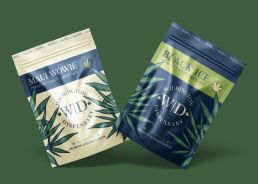
Don’t build a brand that can’t survive its own product
Imagine your hero product disappears tomorrow.
Not your entire company. Just the product that currently pays the bills.
What does your brand still mean? If the answer is “I’m not sure,” that’s worth paying attention to.
Because a logo isn’t a brand. A product name isn’t a brand. A package isn’t a brand. And changing the headline on your website from “THC Gummies” to “Wellness Products” doesn’t magically create a new positioning strategy.
A real brand has an idea underneath the products.
That’s the thing customers recognize. It’s the reason they choose you instead of the company next door. It’s the personality, point of view, promise, experience, and reputation that make the business more than whatever happens to be sitting on the shelf today.
Products change. Markets change. Regulations change. A strong brand gives you something to build on when they do.
This Is where creative strategy actually matters
When regulations change, companies tend to ask, “What do we need to say now?” We think there’s a better question:
“What do we need to mean now?”
Because changing the copy isn’t a strategy.
If your core product disappears, putting a different product photo on your homepage isn’t a pivot. If your audience changes, changing your Instagram bio isn’t a repositioning. And if your product category becomes more complicated, adding a few disclaimers to your ads isn’t a brand strategy.
Creative strategy starts before the creative.
Who are you now? Who are you trying to reach? What problem are you solving? Why should someone believe you? What makes you different? What can you own that your competitors can’t simply copy next week?
Those are the questions that matter when the ground underneath your industry starts moving.
And that’s exactly why cannabis and hemp brands should be thinking about this now – not after the rules change.
Your marketing budget shouldn’t be built around today’s rules
This is where the potential hemp ban should change the way businesses think about marketing budgets, too.
If you’re spending thousands of dollars building a campaign around a product that could become restricted, you’re taking on a pretty obvious strategic risk.
That doesn’t mean you stop marketing. It means you start thinking about what you’re actually building equity in.
Are you building an audience? Are you building recognition? Are you building trust? Are you building an email list? Are you creating a community? Are you developing a reputation for quality? Are you creating a brand that can survive a product change?
Those investments don’t necessarily disappear when the regulatory environment changes.
Your product might.
Your brand shouldn’t have to.
What should hemp brands be doing right now?
First, don’t panic. The rules are still evolving, and this article isn’t legal advice. Hemp businesses should work with qualified legal counsel to understand how current and proposed federal and state laws apply to their specific products and operations.
But from a marketing perspective, there’s plenty you can do right now.
Start by looking at your brand honestly. If your biggest product disappeared tomorrow, what would be left? If the answer is your logo, your Instagram account, and a bunch of product photos, you probably have some work to do.
Figure out what your audience actually values beyond the product. Clarify your positioning. Build a visual identity that isn’t dependent on one SKU. Develop messaging that can evolve. Create an audience you can communicate with directly. And make sure your website, content, and advertising aren’t so narrowly tied to today’s regulatory environment that they’ll become obsolete when the rules change.
You don’t need to predict exactly what Congress will do.
You need to build a brand that can adapt when Congress does something you didn’t expect.
The hemp ban could force the industry to get better at marketing
Nobody knows exactly what the hemp market will look like on December 12.
Congress could change the law again. Federal implementation could evolve. States could move in completely different directions. New regulations could emerge. Some products could disappear while others survive.
But one thing is already clear: the hemp industry is entering a period of significant uncertainty.
For businesses in North Carolina and South Carolina, that uncertainty is amplified because hemp-derived products have occupied a unique space in states where recreational marijuana remains illegal.
And that creates a challenge. But it also creates an opportunity.
If the industry can no longer rely on a particular cannabinoid, product format, or regulatory loophole to differentiate itself, businesses will have to figure out what actually makes them different.
That’s where creative gets interesting.
Because when everyone is selling a product, the brand becomes the reason to choose it.
If the product changes, what stays?
That’s probably the question hemp businesses should be asking themselves right now.
Not, “What happens if the government bans my product?”
That’s important, but it’s not entirely within your control.
Ask instead:
“If my product changes, what does my customer still believe about me?” If the answer is nothing, you’ve built a product – not a brand.
If the answer is trust, quality, expertise, community, experience, personality, or a genuinely differentiated point of view, you’ve got something you can potentially take somewhere new.
That’s what good branding is supposed to do.
It gives a business something bigger than the thing it’s currently selling.
And in an industry facing this much uncertainty, that’s not a nice-to-have. It might be the thing that keeps the business relevant.
If you need help developing your brand to survive the coming changes to hemp and cannabis, let’s connect – we’d love to talk!