

There’s something interesting happening in advertising this holiday season. While artificial intelligence is making it easier than ever to produce polished, elaborate marketing campaigns, some of the world’s biggest brands are going in the opposite direction. They’re embracing authentic marketing – hand-drawn illustrations, stop-motion animation, handmade sets, and the kind of creative details that remind people there’s an actual human being behind the work.
And audiences are paying attention.
Dior found itself at the center of that conversation after viewers questioned whether its holiday animation was really as handmade as the brand presented it.
Meanwhile, Prada and Levi’s leaned into traditional creative techniques, putting the craftsmanship and people behind their campaigns front and center.
It’s an interesting contrast. And there’s a bigger lesson here that has very little to do with how much money you spend on advertising.
In a world where almost anything can be manufactured, being genuine is becoming a competitive advantage – especially when it comes to authentic marketing techniques. It’s also why consumers now expect more than cause-related marketing from the brands they support.
For small businesses, that’s actually pretty good news.
The problem isn’t AI. It’s authenticity.
Let’s talk about Dior.
The luxury fashion house released its 2026 holiday film, Christian Dior’s Night in Colour, promoting it as a hand-illustrated production directed by acclaimed animator Sylvain Chomet.
The film was intended to celebrate traditional animation and the kind of craftsmanship associated with the Dior brand.
But viewers began noticing inconsistencies. Unusual character details, strange movements, and visual glitches sparked speculation that artificial intelligence had played a larger role in the production than the brand suggested.
The controversy quickly became bigger than the animation itself. Chomet denied using generative AI, although he acknowledged that automated frame interpolation was used for a small part of the process.
That’s the interesting part. The conversation wasn’t simply about whether AI had been used. It was about what audiences believed they were being shown.
Consumers aren’t necessarily demanding that brands avoid every new technology. They’re becoming more interested in understanding what’s real, what’s manufactured, and whether a brand’s messaging matches its actions.
AI isn’t inherently inauthentic. But when the story a brand tells about its creative process doesn’t align with what audiences perceive, credibility can take a hit.
For businesses, the takeaway is simple: Don’t manufacture a story about who you are. Tell the story you can actually stand behind.
Handmade is having a moment. But human is the bigger story.
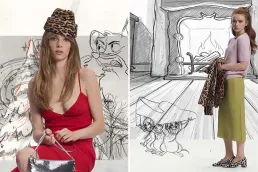
Dior wasn’t the only luxury brand releasing a holiday campaign built around traditional creative techniques. Prada’s Drawing Prada: Animated by Hand campaign brought together live-action footage and hand-drawn illustrations, creating a whimsical holiday world that celebrated storytelling and the creative process.
Levi’s took a different approach with Let’s Get Fuzzy, a stop-motion claymation campaign featuring a larger-than-life yeti named Gus. The production involved handmade sets, characters, and carefully crafted wardrobe details. According to Levi’s, each second of animation required approximately four hours of filming.

These campaigns are interesting because they don’t just show the finished product. They give audiences a glimpse into the work, imagination, and craftsmanship that went into making it. The creative process becomes part of the story.
And that’s something worth paying attention to.
The appeal isn’t necessarily that everything was made by hand. It’s that the work feels intentional. You can appreciate the details, the imperfections, and the effort involved. In an increasingly automated world, those human elements have a way of standing out.
Small businesses have something big brands can’t manufacture
Here’s where things get interesting for smaller businesses.
A luxury fashion house can spend millions producing a holiday campaign designed to communicate warmth, nostalgia, craftsmanship, and human connection. A small business might already have all of those things.
The family-owned restaurant where the same people have been cooking for 20 years. The local brewery where the owner knows half the customers by name. The med spa where the team genuinely cares about helping people feel confident. The boutique where the owner personally selects every product on the shelves.
These aren’t marketing concepts. They’re real parts of the business. And they’re often the most compelling stories a brand can tell.
The problem is that businesses sometimes overlook what makes them interesting because they’re too close to it. They spend so much time promoting products, services, and special offers that they forget to communicate the people and personality behind them.
That’s a missed opportunity. Customers have plenty of choices. They can find another restaurant, another service provider, or another retailer.
What they can’t necessarily find is another business with your people, your perspective, your experience, and your story.
Authentic marketing starts by recognizing that your business already has something worth talking about. Your job is to tell that story in a way that makes people care. For a fun look at brands doing this well, here’s why On Brand with Jimmy Fallon is worth a watch.
Your holiday marketing doesn’t need to be perfect
There’s a reason handmade creative is resonating with audiences right now. It feels different from the overly polished, predictable content people scroll past every day.
That doesn’t mean your holiday marketing should look unfinished or careless. It means there’s room for personality, spontaneity, and a little bit of imperfection.
A restaurant doesn’t need an elaborate holiday commercial when a short video of its team preparing a seasonal special might be more engaging.
A retailer doesn’t need an expensive studio production to show customers what makes its products worth giving. And a local service business doesn’t need another generic holiday graphic when a genuine thank-you to its customers could make a stronger impression.
Think about the stories your business could tell. Show the people behind the scenes. Share the process, not just the finished product. Highlight the customers, partnerships, and community connections that make your business what it is.
Give people a reason to connect with the brand beyond whatever you’re selling this week.
Most importantly, let your personality show. Your holiday marketing doesn’t need to sound like every other business posting seasonal greetings. It should sound like you.
These ideas don’t require a million-dollar production budget or a complicated creative brief. Sometimes the most effective marketing starts with paying attention to what’s already happening inside your business.
AI in advertising can help Just don’t let it replace your identity.
It would be easy to turn this conversation into an argument against artificial intelligence. But that misses the point.
AI can be an incredibly useful creative and marketing tool. It can help businesses brainstorm campaign concepts, explore visual directions, generate content ideas, improve workflows, and accomplish things that might otherwise require considerably more time and resources.
There’s nothing inherently wrong with using it. The problem starts when businesses confuse efficiency with originality.
If every competitor is using the same prompts, templates, and AI-generated imagery, the result is going to be a whole lot of marketing that looks remarkably similar. Technology might make it easier to produce content, but it doesn’t automatically give that content a personality, a point of view, or a reason to exist.
That’s still the job of strategy and creative thinking.
Use the tools that make your business better. Experiment with new technology. Find ways to work smarter. But don’t outsource the parts of your brand that make it worth remembering.
Your perspective, personality, experience, and relationships with customers aren’t things you should be trying to automate away.
Authentic marketing & brand authenticity Isn’t just a holiday trend.
The holiday season simply makes this conversation more obvious. People are already thinking about family, community, traditions, and meaningful experiences. Brands have an opportunity to connect with those emotions in ways that feel genuine.
But authenticity shouldn’t disappear when the holiday decorations come down.
A brand that suddenly becomes personal and community-focused in December, only to return to generic promotional messaging in January, isn’t building much of a relationship with its audience.
Authenticity has to show up consistently. It’s reflected in the way you communicate, the experiences you deliver, the promises you make, and the way you treat the people who support your business.
That doesn’t mean every social media post needs to be a heartfelt behind-the-scenes story. It means your marketing should reflect the actual character of your business.
The strongest brands don’t have to constantly convince people they’re authentic. Their actions, experiences, and communication make it believable.
Your brand doesn’t need to pretend to be something it’s not.
The biggest lesson from this year’s holiday advertising conversation isn’t that every brand needs to go back to hand-drawn illustrations or stop-motion animation. It’s that people are paying attention to the difference between what brands say and what they actually deliver.
For small businesses, that’s an opportunity.
You don’t need the production budget of Dior, the animation team of Prada, or the creative resources of Levi’s. You have something worth showing off: a real business with real people and a story worth telling.
At Blue Ridge Creative Marketing, we believe great marketing starts with understanding what makes a brand different. Then it’s our job to find a creative way to bring that difference to life.
Because in a world where almost anything can be generated, the things that are genuinely yours are worth showing off.
Don’t manufacture authenticity. Build a brand people can actually believe in.
Frequently asked questions about social media for business
Authentic marketing is an approach to promoting a business that reflects its real personality, values, people, and customer experience. Rather than relying on exaggerated claims or manufactured stories, it communicates what genuinely makes a brand different.
Authenticity helps businesses build trust, establish stronger customer relationships, and differentiate themselves from competitors. When marketing reflects the actual experience customers can expect, it creates more credible and meaningful connections.
Absolutely. AI can support content creation, brainstorming, design, and marketing workflows without compromising authenticity. The key is using technology thoughtfully and ensuring the final work reflects the brand's real identity, perspective, and creative direction.
An authentic marketing campaign feels consistent with the brand behind it. Its messaging, visuals, and storytelling reflect real experiences and values rather than relying on trends or manufactured narratives that don't align with the business.
Authenticity can make advertising more relatable, memorable, and credible, but it isn't a substitute for strategy. Effective campaigns still need clear objectives, audience understanding, compelling creative, and performance measurement.