


The rise of remote work didn’t just change how agencies operate. It changed the question every business owner asks when they start shopping for marketing help: does it matter where my agency is?
The honest answer is: it depends on what you’re buying. But for most businesses in this region – hospitality operators, healthcare practices, cannabis brands, restaurants, bars – the local marketing agency vs remote marketing agency question has a clear answer when you think it through.
Here’s how to think it through.
When a remote agency actually makes sense
There are legitimate reasons to hire remotely. If you need a highly specialized skill that doesn’t exist in your market – a niche technical SEO firm, a performance marketing team with deep e-commerce experience, an agency that’s built specifically around your industry vertical regardless of geography – going remote to get the right expertise is a reasonable call.
Remote agencies also work well for businesses whose marketing is primarily digital and national in scope. If your customer is everywhere and your marketing strategy reflects that, geography matters less. The agency that understands your category and your funnel is more valuable than the agency that knows your city.
But most businesses reading this post aren’t in that situation. Most businesses are rooted in a market, serve a regional customer, and need marketing that reflects both.
What a local marketing agency actually knows that a remote one doesn’t
Market knowledge isn’t something you can download. It’s built from proximity – knowing which neighborhoods are gentrifying, which food scenes are saturated, which local media outlets actually move the needle, which community relationships open doors that cold outreach never will.
A remote agency managing your restaurant’s social media has never eaten in your dining room. They’ve never walked your block at 7pm on a Friday to see what the foot traffic actually looks like. They’ve never had a conversation with the editor of your local lifestyle magazine or the organizer of the food festival your competitors sponsor every year.
A local marketing agency has. And that knowledge shows up in the work in ways that are hard to quantify and impossible to fake.
For hospitality brands in the Southeast (where the market dynamics shift city to city, where the guest profile in Wilmington is genuinely different from the guest profile in Charleston, where regional identity is part of the brand story) that proximity is not a nice-to-have. It’s a strategic advantage.
The relationship dynamic is different
Remote agency relationships are transactional by default. Not because remote agencies don’t care – many of them do excellent work, but because the relationship is mediated entirely through screens, scheduled calls, and project management software. The conversation, the site visit, the in-person brand review where someone says something that changes the direction of the whole project don’t always happen on a Zoom call.
A local marketing agency relationship is built differently. It’s built in the same market, often in the same rooms, and sometimes at the same events. That proximity creates accountability that a monthly reporting dashboard can’t replicate. When your agency is down the street, the relationship is harder to deprioritize on both sides.
For business owners who want a true marketing partner (not a vendor who manages deliverables from another time zone) the local marketing agency vs remote marketing agency question answers itself.
The Southeast is a specific market that rewards specific knowledge
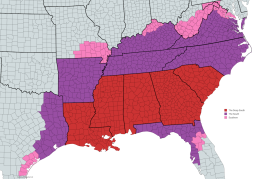
This region is not a monolith. The hospitality market in Myrtle Beach operates on a seasonal pressure that doesn’t exist in Atlanta. The cannabis regulatory environment in North Carolina is different from South Carolina or Virginia. The healthcare marketing landscape in Raleigh is shaped by the Research Triangle in ways that matter if you’re trying to reach that patient population.
A remote agency parachuting into a Southeast market with a generic strategy isn’t wrong because they’re remote. They’re wrong because they don’t know the market as well as a homegrown agency. Geography and market knowledge aren’t the same thing… but in a region this specific, they’re closely related.
Blue Ridge Creative Marketing has been working in the Southeast since 2013. Wilmington, Raleigh, Charleston, Richmond… these aren’t markets we’re entering. They’re markets we operate in. The relationships, the media landscape, the competitive dynamics, the cultural context that makes a brand resonate here is not something we had to research. It’s something we’ve built over years of doing the work in this region.
When to choose a local marketing agency vs remote
Choose a local marketing agency when your business is rooted in a specific market, when the relationship matters as much as the deliverable, when regional market knowledge is a genuine competitive advantage, and when you want a partner who’s accountable to the same community you operate in.
Go remote when the specialized expertise you need doesn’t exist locally, when your marketing is national in scope and geography is genuinely irrelevant, or when the best agency for your specific problem happens to be somewhere else and the tradeoff is worth it.
For most Southeast businesses in hospitality, healthcare, cannabis, and food and beverage — that last scenario is the exception, not the rule.
What Blue Ridge Creative Marketing brings as a local marketing agency
We’re not going to tell you remote agencies can’t do good work. Some of them do excellent work. What we’ll tell you is that the local marketing agency vs remote agency decision comes down to what you actually need from the relationship – and for most businesses we work with, proximity to the market produces better strategy, better creative, and better outcomes than distance ever will.
If you’re a Southeast business looking for a marketing partner who knows this region the way you do, let’s talk.