

Most businesses go into a website redesign not knowing what they’re buying until the invoice arrives. They assume redesign means new visuals. The agency assumes it means a full rebuild. Somewhere in the middle, expectations collide and the project takes twice as long and costs twice as much as anyone planned.
If you’re asking yourself “what does a website redesign include?” before you talk to anyone, here’s a straight answer – broken down by what’s standard, what’s optional, and what most agencies won’t tell you until you’re already in the engagement.
What a website redesign actually covers
A website redesign is not a reskin. Changing colors, swapping fonts, and dropping in new photos is a refresh. A redesign is a ground-up rebuild of how your website works – the structure, the user experience, the content architecture, the technical foundation – with new visual design applied on top of a site that’s been rethought, not just repainted.
At Blue Ridge Creative Marketing, every website redesign project starts in the same place: understanding what the current site is failing to do. Because the goal isn’t a website that looks better. It’s a website that performs better… more conversions, more inquiries, more direct bookings, more patients, more discovery calls. The visual design is the expression of a strategy, not a substitute for one.
The standard components of a website redesign
Discovery and strategy
Before anyone opens a design file, the right agency is asking questions. What’s working on the current site and what isn’t? What does the target audience need to find, feel, and do? What are competitors doing and where is the gap? What does success look like for this redesign and how will it be measured?
Discovery is the phase most clients want to skip because it doesn’t produce anything visible. It’s also the phase that determines whether the redesign produces a website that works or a website that looks good and does nothing.
Sitemap and information architecture
A website redesign includes a rethink of the site’s structure (how pages are organized, how users navigate, what content lives where, and how the site guides a visitor toward the action you want them to take). This is the information architecture phase and it happens before design, because design built on the wrong structure produces a beautiful site that’s hard to use.
UX and wireframing
Wireframes are the blueprint of the site – the layout and functionality of each page before color, typography, and imagery are applied. This phase determines where the headline lives, where the call to action appears, how the navigation behaves on mobile, and how the user experience flows from landing to conversion.
Skipping wireframes and going straight to visual design is one of the most common reasons website redesigns fail. You end up with a site that looks great on a desktop mockup and doesn’t work the way a real user actually navigates it.
Visual design
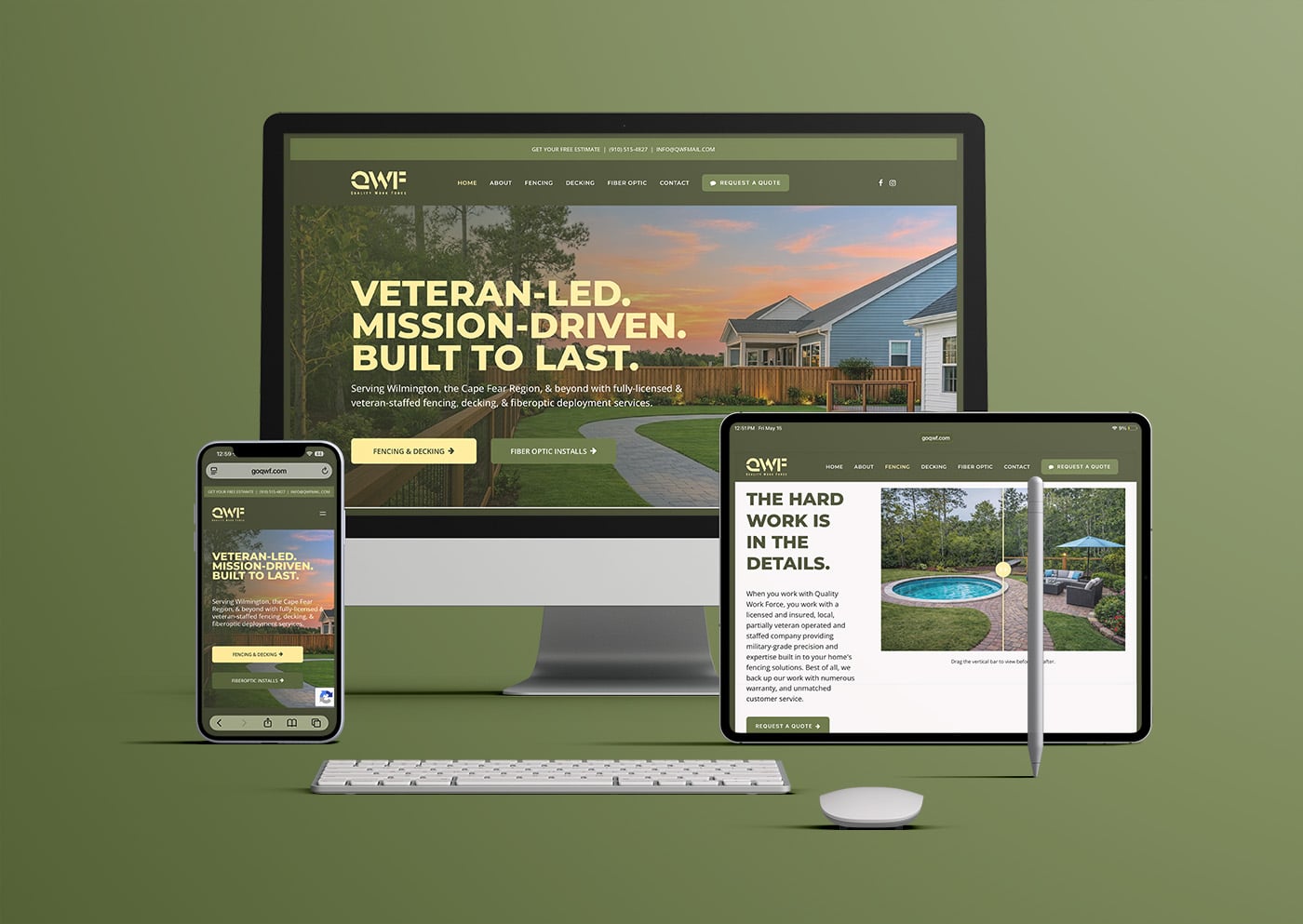
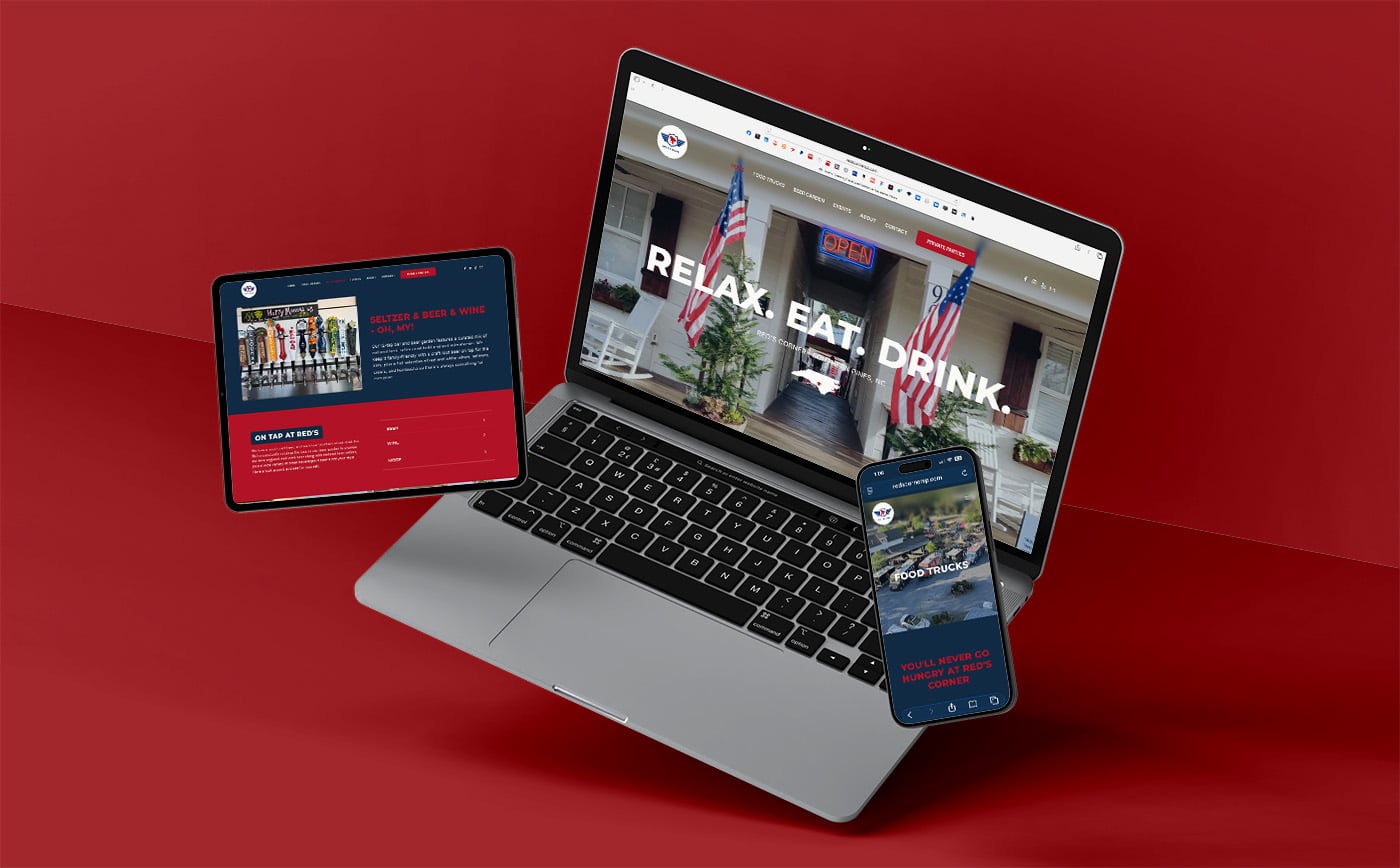
This is the phase most clients think of when they think of a redesign – the look and feel. Typography, color, imagery, layout, brand expression across every page. At Blue Ridge, visual design is built on top of the strategy and wireframe work that precedes it, which means every design decision is made in service of a conversion goal rather than an aesthetic preference.
For businesses with an existing brand identity, the redesign applies and extends that system across the site. For businesses whose brand is also evolving, website redesign and brand identity work often happen in parallel – and the result is a site that feels like a genuine expression of the brand rather than a template with a logo dropped in.
Copywriting
This is where most website redesign engagements get complicated. Copy is either the most underestimated or the most contentious part of any redesign project.
At Blue Ridge, copywriting is scoped per engagement. Some clients come to the project with clear, strong copy that just needs to be adapted to a new structure. Others need copy written from scratch – or need existing copy rewritten to match a repositioned brand and a site built to convert rather than inform. We handle both, but the scope needs to be established upfront because copy that arrives late or arrives wrong is the single most common reason a redesign misses its launch date.
If you’re planning a website redesign, know before the project starts whether you’re providing copy or whether the agency is writing it. And if you’re providing it, have it ready before design begins… not after.
WordPress development
Blue Ridge builds on WordPress – the most widely used CMS in the world and the platform that gives clients the most flexibility to manage and update their own content after launch. A WordPress build means you own your site, you can update it without calling an agency every time your hours change or your menu gets a new item, and you’re building on a platform with a massive support ecosystem.
Development is where the design becomes a functioning website – responsive across every device, optimized for page speed, built with clean code that search engines can crawl, and integrated with the tools your business actually uses. Reservation systems, booking platforms, e-commerce, email capture, analytics — these integrations are scoped and built during the development phase.
SEO foundation
A website redesign is one of the highest-leverage SEO opportunities a business has – and one of the most commonly wasted ones. A redesign done without SEO consideration can tank rankings that took years to build. A redesign done with SEO built into the foundation from the start can dramatically accelerate organic visibility.
At minimum, a website redesign should include proper URL structure and redirect mapping, optimized page titles and meta descriptions, header hierarchy, site speed optimization, mobile responsiveness, and schema markup that helps search engines understand what your business does and who it serves. These aren’t optional add-ons. They’re the foundation of a site that performs in search after launch.
Quality assurance and launch
Before any site goes live, it gets tested across browsers, across devices, and across screen sizes. Every link, every form, every integration, every page on mobile and desktop. QA is the phase that catches the things that look fine in a design file and break in a browser.
Launch is not the end of the engagement. It’s the beginning of the performance phase – monitoring analytics, tracking conversion rates, making adjustments based on how real users interact with the site after it’s live.
What drives website redesign scope up
Page count is the biggest factor. A five-page brochure site is a fundamentally different project than a fifty-page site with location pages, service pages, case studies, a blog, and an e-commerce component.
Custom functionality adds scope. A standard WordPress build with a contact form and a menu is not the same project as a site with custom booking integration, a member portal, or a multi-location directory.
Content volume matters. The more original photography, video, and copy the redesign requires, the more the scope expands beyond design and development into content production.
Brand clarity at the start of the project affects everything. A client who comes to a redesign with a clear brand identity, strong photography, and ready copy moves through the engagement faster and at lower cost than one who’s figuring out their brand and their website simultaneously.
What you should expect to spend
A website redesign from a legitimate full-service agency typically ranges from $3,000 to $30,000+ depending on scope. Below that range, you’re making real tradeoffs – on discovery, on custom design, on development quality, or on the strategic thinking that makes the difference between a site that looks good and one that performs.
The website redesign cost that matters isn’t the line item. It’s what the site produces after it’s live. A $15,000 site that drives consistent inquiry volume, ranks in local search, and converts visitors into customers at a rate your old site never approached isn’t a $15,000 expense. It’s infrastructure.
What Blue Ridge Creative Marketing includes in a website redesign
Every Blue Ridge website redesign engagement includes discovery and strategy, sitemap and information architecture, UX wireframing, visual design, WordPress development, SEO foundation, quality assurance, and launch support. Copywriting is scoped per project – we write it when it’s needed and work with client-provided copy when it’s ready.
What doesn’t change is the standard: every site we build is designed to perform and look beautiful, not just to exist. If you’re planning a redesign and want to know what the right scope looks like for your specific business, reach out. We’ll give you a straight answer.